
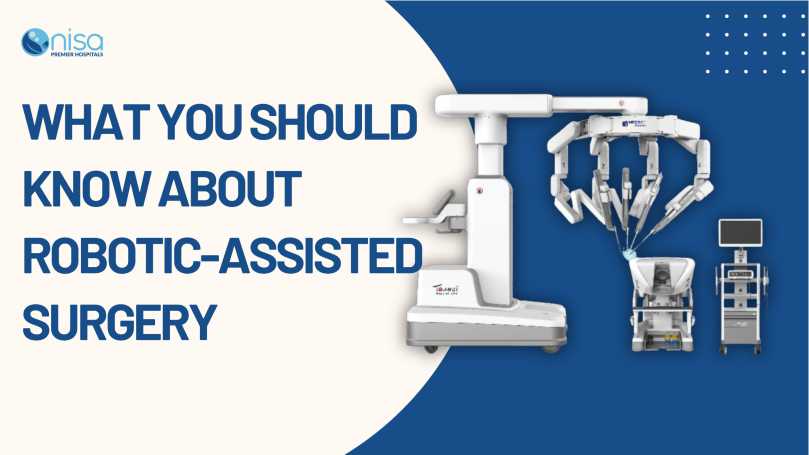
Medical technology is advancing rapidly, and one of the most transformative innovations in modern healthcare today is Robotic-Assisted Surgery. It is changing the way complex procedures are performed, offering patients safer, less painful, and faster recovery experiences.
But what exactly is robotic-assisted surgery, and why is it considered a breakthrough?
Here’s what you should know.
- What Is Robotic-Assisted Surgery?
Robotic-assisted surgery is a minimally invasive surgical technique where a specialist surgeon operates using a robotic system. The robot does not act independently — instead, it precisely follows the surgeon’s hand movements through a console. This enhances accuracy, reduces human error, and allows for very delicate procedures that would be challenging with traditional methods.
- The Surgeon Is Still in Full Control
One of the biggest misconceptions is that the robot “performs” the surgery on its own.
This is not true.
The surgeon controls every movement of the robotic arms. The technology gives the surgeon:
- A magnified 3D view of the surgical area
- Finer control instruments
- Greater flexibility than the human hand
- Key Benefits for Patients
Robotic-assisted surgery offers several advantages, especially when compared to open surgery or even standard laparoscopy. Some of the major benefits include:
- Smaller incisions
- Less pain after surgery
- Lower risk of bleeding and infection
- Minimal scarring
- Shorter hospital stay
- Faster recovery and return to normal activities
For many patients, this means a smoother and more comfortable surgical experience.
- Which Surgeries Can Be Performed Robotically?
Robotic-assisted surgery is particularly helpful in complex and delicate procedures. It is commonly used in:
- Bariatric & Gastrointestinal Surgery
- Urologic surgery (e.g., prostate procedures)
- Gynaecologic surgery
- General advanced minimally invasive procedures
This technology gives surgeons better access to deep or narrow areas of the body while protecting surrounding healthy tissues.
- Why This Matters for Nigerian Patients
Until recently, patients had to travel abroad to access this level of surgical technology. Now, with its introduction at Nisa Premier Hospital, Nigerians can benefit from world-class surgical care locally — with the same level of expertise and safety standards available internationally.
In Summary
Robotic-assisted surgery combines the skill of a highly trained surgeon with the precision of advanced technology. It leads to better outcomes, fewer complications, and a faster return to daily life.
The future of surgery is here — and it is already transforming patient care.